
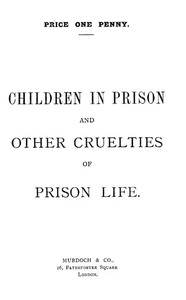
Children in Prison and Other Cruelties of Prison Life by Oscar Wilde
This isn't a novel or a play. It's a long letter, really—a piece Wilde wrote after his own release from prison. He was broken by his experience, but instead of just writing about himself, he turned his attention to a group of people society had completely forgotten: children serving time in adult prisons.
The Story
There's no traditional plot. Wilde lays out what he saw and learned about the prison system. He describes the pointless, soul-crushing labor, the isolation, the terrible food, and the constant fear. But the core of his argument focuses on the children. He talks about boys as young as thirteen, tried as adults and subjected to the same harsh conditions. He argues that prison doesn't reform them; it hardens them, teaching them only bitterness and shame. The "story" is his relentless case against a system designed to punish, not to help, and his desperate appeal for compassion and change.
Why You Should Read It
This book strips away the glittering image of Wilde and shows you the man underneath. His famous wit is here, but it's a weapon, turned against hypocrisy and cruelty. Reading it, you feel his fury and his profound sadness. It’s personal. You get the sense that by fighting for these children, he was also trying to heal some of the damage done to his own spirit. It’s a powerful reminder that great writers aren't just entertainers; they can be witnesses and advocates. This short work adds a crucial, deeply human layer to everything else he ever wrote.
Final Verdict
This is essential reading for anyone who loves Wilde and wants to understand the full man. It's also for readers interested in social justice, history, or the raw power of a persuasive argument. It’s not a fun read, but it’s a quick and important one. Perfect for when you want to see how art and conscience can collide, creating something that’s both beautiful in its conviction and devastating in its truth.
Legal analysis indicates this work is in the public domain. You do not need permission to reproduce this work.
Michael Wilson
1 year agoHaving explored several resources on this, I find that the step-by-step breakdown of the methodology is extremely helpful for students. I’ll definitely be revisiting some of these chapters again soon.
Paul Wilson
1 month agoI started reading this with a critical mind, the breakdown of complex theories into digestible segments is masterfully done. Top-tier content that deserves more recognition.
Margaret Williams
8 months agoAfter spending a few days with this digital edition, the narrative arc keeps the reader engaged while delivering factual content. It’s hard to find this much value in a single source these days.
James Johnson
10 months agoThe author provides a very nuanced critique of current methodologies.
Emily Rodriguez
4 months agoI stumbled upon this title during my weekend research and the cross-referencing of different chapters makes it a great study tool. I'll be citing this in my upcoming project.