
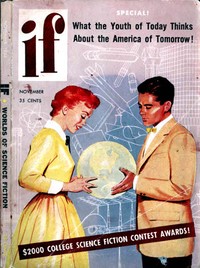
Stalemate by Basil Wells
Let's talk about a book that deserves way more attention than it gets. Basil Wells' 'Stalemate' is a post-apocalyptic story from 1948 that feels surprisingly fresh. It skips the usual rubble-and-mutants phase and dives right into the long-term consequences of survival.
The Story
Generations ago, a global catastrophe drove the last of humanity into the Citadel, a colossal, sealed underground refuge. The founders left strict instructions: stay inside until the automatic sensors declare the surface world habitable again. A century has passed. The Citadel is now a decaying, rigid society governed by the unyielding 'Laws of Survival.' Food is rationed, movement is restricted, and doubt is the greatest crime.
Royce, a brilliant and restless engineer, notices the sensors have been silent for decades. He begins to suspect they might have failed long ago. What if the world outside healed, and they've been living in a tomb of their own making? His investigation pits him against the powerful, paranoid Council that sees any challenge to the Laws as a threat to their very existence. The core of the story is Royce's desperate fight not against an external enemy, but against the ingrained terror and dogma that keeps his people prisoners.
Why You Should Read It
What grabbed me wasn't the sci-fi tech, but the human drama. Wells creates this incredible pressure-cooker atmosphere. You feel the weight of the low ceilings and the tighter grip of the Council as Royce gets closer to the truth. The characters aren't just rebels and tyrants; they're people shaped entirely by a myth they've never questioned. Royce's struggle is so relatable—it's that moment when you look at the way things have 'always been done' and ask 'why?' The book is a sharp look at how fear can become a tradition, and how hard it is to be the first person to say 'maybe we're wrong.'
Final Verdict
This is a perfect pick for readers who love classic sci-fi ideas with a strong human heart. If you enjoy the societal puzzles of Asimov's 'Foundation' or the tense, confined rebellion of Hugh Howey's 'Wool,' you'll find a lot to love here. It's a quick, thought-provoking read that proves a great premise and compelling characters are timeless. Don't go in expecting flashy action; go in for a smart, suspenseful story about the courage it takes to open a door that's been locked for a hundred years.
You are viewing a work that belongs to the global public domain. Preserving history for future generations.
Brian Scott
1 year agoFrom the very first page, the character development leaves a lasting impact. This story will stay with me.
Kenneth Gonzalez
9 months agoI have to admit, it challenges the reader's perspective in an intellectual way. Thanks for sharing this review.

Mark Davis
1 year agoClear and concise.