Exploration Survival Adventure Tales - eBooks
15 Books foundExploration Survival Adventure Tales
This category gathers narratives that center on physical danger, political upheaval, and the struggle for survival or dominance. The works here range from frontier adventures to naval campaigns, from detective puzzles to tales of colonial encounter. What unites them is a preoccupation with characters tested by external forces—storms, battles, enemies, or social pressures—and the authorial choices that shape those tensions. The category includes authors such as Arthur Conan Doyle, Alfred Henry Lewis, T. T. Jeans, and William Le Queux, all of whom use setting and dialogue to dramatize conflict.
Recommended Books
Conan Doyle’s early collection experiments with colonial adventure and detective puzzles, showing the author testing narrative voices across genres of conflict.
Alfred Henry Lewis’s dry, ironic portrayal of Dodge City’s rough justice and eccentric characters offers a focused lens on frontier conflict and social order.
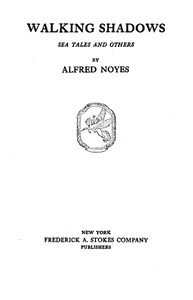
Alfred Noyes’s 1918 collection uses sea tales set against World War I, with recurring images of light and isolation to examine conflict at sea.
How This Differs from Other Categories
Unlike the Romance & Domestic Life category, which emphasizes personal relationships and interiority, this category foregrounds external struggle and social or political stakes. It is also more action-oriented than the Lives, Customs & Historical Worlds grouping, though it shares historical settings. Compared to Future Societies, these works are grounded in contemporary or near-contemporary conflicts rather than speculative scenarios.
Classification Note
Some books in this category, such as detective stories, involve intellectual conflict rather than physical struggle, and the boundary with mystery fiction is fluid. Readers may find that a few works touch on domestic themes as well; the category should be treated as a starting point, not a strict label.