
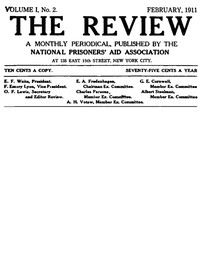
The Review, Vol. 1, No. 2, February 1911 by Various
Let's be clear from the start: this isn't a novel. The Review, Vol. 1, No. 2, February 1911 is exactly what it says on the cover—a single issue of a monthly literary magazine, preserved in print. There's no overarching plot. Instead, you open the pages and are immediately a guest at a 1911 literary salon.
The Story
There is no single story. The 'plot' is the experience of browsing. One page might have a melancholic poem about autumn, full of formal language. Turn the page, and you're in a short story about a misunderstood artist or a subtle drama of reputation in a country house. Then, an essay pops up, seriously discussing the role of women in modern society or the impact of new technology. It's a mixed bag. Some pieces are stiff and dated, while others have a surprising sharpness. You're not reading a crafted narrative; you're people-watching through text, getting a raw, unfiltered look at the intellectual snacks being served up in that specific month of 1911.
Why You Should Read It
I loved it for the atmosphere and the historical eavesdropping. It's the literary equivalent of finding a great-grandparent's diary. You see the formalities, the certainties, and the anxieties of the age just before the cataclysm of the First World War. Reading the advertisements alone is a trip! The themes are universal—love, art, progress, doubt—but they're dressed in the specific fashions of the time. It made me appreciate how much style and social context shape the stories we tell. It's not always a 'page-turner' in the modern sense, but it is a consistently intriguing brain-tickler.
Final Verdict
This is a niche read, but a rewarding one. It's perfect for history buffs, writers, or anyone curious about the daily intellectual life of the past. If you go in expecting a fast-paced novel, you'll be disappointed. But if you approach it like an archaeological dig, savoring each fragment and wondering about the hands that first held it, you'll find something special. It's for the patient reader who enjoys the journey of context as much as the story itself.
This text is dedicated to the public domain. Knowledge should be free and accessible.
John Perez
1 year agoMy first impression was quite positive because the transition between theoretical knowledge and practical application is seamless. This adds significant depth to my understanding of the field.
Lucas Wilson
1 year agoVery helpful, thanks.
Mark Smith
2 years agoTo be perfectly clear, the author's voice is distinct and makes complex topics easy to digest. I learned so much from this.
Charles Williams
6 months agoAfter finishing this book, the atmosphere created is totally immersive. I will read more from this author.





Susan Johnson
2 years agoThe clarity of the introduction set high expectations, and it addresses the common misconceptions in a very professional manner. I appreciate the effort that went into this curation.